 foxxcyber/docs
Overview
What RailCompliant is, what it keeps track of, and who uses it.
RailCompliant is a hosted application for heritage railroads, tourist railroads, and railway museums. It keeps the federal inspection and maintenance record your locomotives are required to have under 49 CFR Part 230 (steam) and Part 229 (modern and diesel equipment), and it runs the shop's day-to-day maintenance work in the same place.
Your railroad gets its own workspace. Everyone at your railroad — paid staff and volunteers alike — works inside it, and no other railroad can see your records.
The two halves
The compliance record. Inspections, tests, repairs, and alterations are filed against a specific locomotive on a form that matches the FRA form your inspector already knows. Each record captures who performed the work, who certified it, and when. Records are signed off through an approval chain and every change is written to a permanent history that cannot be edited after the fact. On top of those events the app produces the paperwork: the Form 4 boiler specification card, the annual FRA Form 6180.49A, and the filing deadlines each completed inspection creates.
The shop. Work orders, parts inventory, bulk consumables, labor hours, excursions, and crew qualifications. This is the mutable, day-to-day side: what is broken, who is fixing it, which parts came off the shelf, and what it cost.
How the two connect
The halves are deliberately wired together rather than kept apart:
- Completing a work order can produce the compliance record it was raised for, so the inspection is filed as part of finishing the job instead of as separate paperwork afterwards.
- Costs roll up from labor and parts to the work order, and from work orders to the locomotive, so "what has this engine cost us" is a number you can read rather than reconstruct.
- Running the railroad feeds the compliance clocks. Excursions, mileage entries, and daily inspections all count as service days, which is what most Part 230 intervals are measured in.
Because of that last point, the app computes what is due next instead of relying on a wall calendar. The Compliance Due page shows every tracked obligation for every locomotive with its citation, how much of the interval has elapsed, and whether it is current, due soon, or overdue — and it opens work orders for the things that are coming due.
Who uses it
- Mechanical department and shop foremen — filing inspections, running work orders, drawing parts.
- The chief mechanical officer or whoever signs — certifying inspections, the Form 4 card, and the annual report.
- Volunteers — logging hours against the job they worked, with a set of plain-language guides at Help & Guides written for people who do not use the app every day.
- Administrators — adding people, granting sign-off authority, and managing the subscription.
What RailCompliant is not
RailCompliant is a record-keeping system, not a legal authority. Where an obligation is tracked, the app shows the citation and links to the official eCFR text so you can read the rule itself. Your qualified person makes the determination; the app records it.
Some FRA record families are deliberately out of scope and are not, and will not be, part of the app: accident and incident reporting (Part 225), hours of service (Part 228), grade crossing signal systems (Part 234), and signal systems (Part 236). Those carry casualty and employee personal information and a different legal posture from mechanical records.
Where to go next
- Signing up and your first login — create your railroad's workspace and get oriented.
- Navigating the app — the sidebar, the dashboard, and where everything lives.
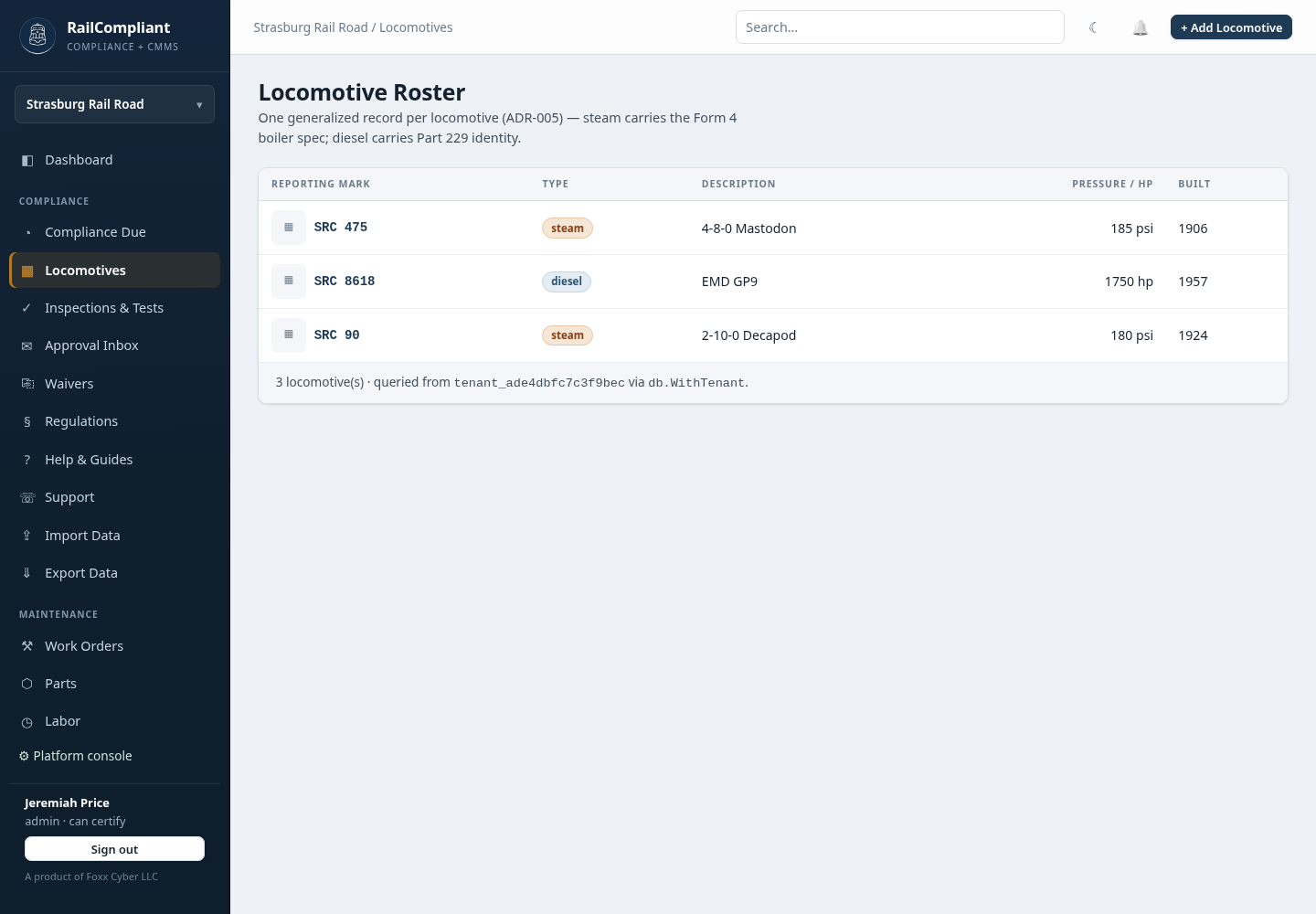
- Locomotives — add the fleet first; almost everything else hangs off it.
- The compliance dashboard — how due dates are worked out.