 foxxcyber/docs
Consumable stores
Track bulk consumables — coal, oil, diesel, water, sand — and draw them down when you fuel a locomotive.
Stores holds bulk consumables rather than countable parts: coal, oil, diesel, gas, water, sand, lubricants, and anything else measured by weight or volume. Purchases add to a stock; fuelling a locomotive draws it down.
The list
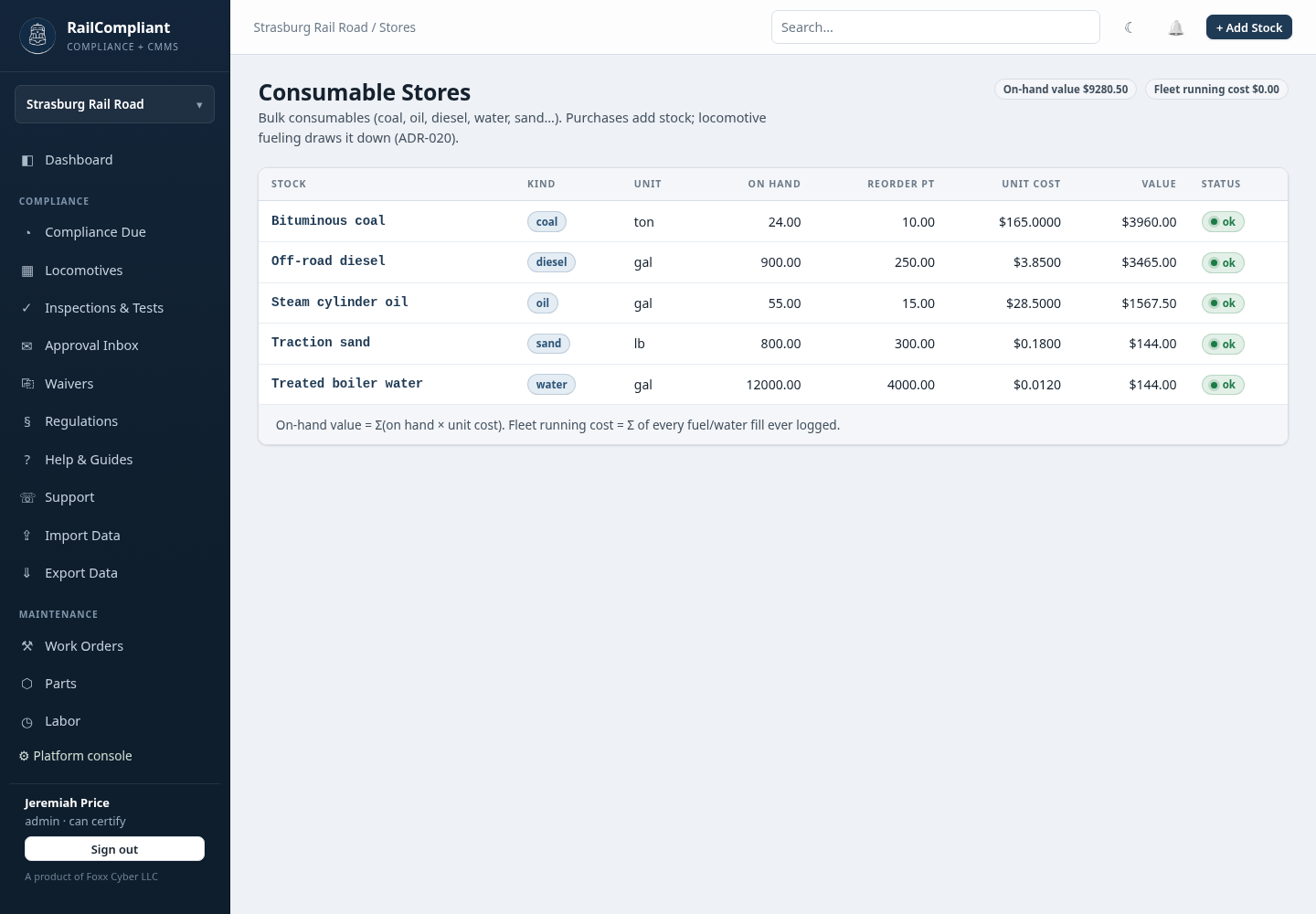
Each stock shows its Stock name, Kind, Unit, On hand, Reorder pt, Unit cost, Value, and a Status badge that flags anything at or below its reorder point.
Two figures sit above the table:
- On-hand value — the quantity on hand multiplied by unit cost, summed across every stock.
- Fleet running cost — the total of every fuel and water fill ever logged, which is a different question from what is currently in the bunker.
Adding a stock
Click + Add Stock and fill in the Name, the Kind (coal, oil,
diesel, gas, water, sand, lube, or other), the Unit you buy
and issue it in, the opening On hand quantity, the Unit cost ($), a
Reorder point, and any Notes. Click Create stock.
Recording a purchase
On the stock's page, use the Record purchase form: Quantity in the stock's unit, Unit cost ($) and Vendor (both optional), and the Date. Click Record purchase. The purchase is recorded and on-hand increased in the same step, and the stock's unit cost is updated to the price you just paid.
The page also lists Purchases and Fueling draws — the fills that have been taken out of this stock, with the locomotive each went to.
The link to fuelling
When you log a fuel or water fill against a locomotive, you can name the stock it came from. Doing so reduces that stock by the quantity taken and defaults the fill's unit cost from the stock's current cost, so the same coal is not priced two different ways in two different places.
Name the stock when the material genuinely came out of your own supply. Log the fill without a stock when it did not — a diesel top-up bought at a pump on the road, or water taken on at a foreign railroad — and enter the price you actually paid. Both kinds of fill count toward the locomotive's running cost; only the first moves your inventory.
Stores and Parts behave differently on purpose. Parts leave inventory only through a work order, so each unit is tied to a job. Stores leave inventory through fuelling, so each unit is tied to a locomotive and a running day.